![The newly-restored F-24 enjoying the morning sun. [All Images Credited to Mike Davenport]](https://kitplanes.com/wp-content/uploads/2026/05/DSC_0001-1024x683.jpg)
The first Fairchild that I ever laid eyes on was landing on a gravel strip in Wainwright, Alberta in the early ‘60s. It was the “flying box car” a Fairchild C119 of the RCAF and had just about the same look and charm.
The next one that I saw was in 1987, a Fairchild 24k, serial number 3304 and that one was a whole lot smaller but way prettier, even though it was in pieces and undergoing restoration. Over the years, I would see a lot more of this one and its owner, the late Werner Greisbeck, when I moved my Stinson 108 into a hangar bay next to it.
The Fairchild 24 first appeared as a two-seat aircraft in 1931 and grew over the next many years through 16 variations with engines ranging from an inverted 4 cylinder 90 hp American Cirrus through a 7 cylinder 110 hp Warner Scarab on the 24C-8 and 24C-8A. Through 1934 and 1935, not only were the engines changed but also the model 24 changed in shape with a new nose, larger wingspan, different wing struts and new rudder design. Sometime in 1934 or 1935 a third seat was added. Optional flaps were added in 1935. By 1936, the 24C-8E offered the 145 hp Warner and the 24C-8F had the 145 hp Ranger. In 1937 two more models were added; 24G and 24H using the Warner radial and a 150 hp inline Ranger. This same year the fourth seat was made available. If you are still with me through all of this, in 1938 the J and K models were offered. An owner had to have significant resources available to buy a Fairchild in 1938. A Standard model was priced at $6,350 while a Deluxe model was even more as it included flaps and wheel pants. Considered to be one of the luxury business class aircraft of the day.
Production of a military version continued during the Second World War with sales to the US army and navy as well as the Royal Air Force. Fairchild discontinued in-house production of the F24 series in 1946 and contracted with Temco of Dallas TX who built several hundred of the models F-24R46 and the F-24W46.
One of those who could afford a new airplane was the then president of Pan American Airlines. Juan Terry Trippe purchased the next one on the line, serial #3305 complete with Edo 2880 floats. It was to be for his personal use, not that of the airline. It is rumored that W. K. Vanderbilt II may have purchased serial #3310 but this can’t be confirmed. However, the president of Fairchild, Sherman Fairchild kept serial #3315 for his exclusive use. As you can see it took some significant wealth to purchase an airplane in the depths of the Great Depression. To put this in perspective, the average annual wage in 1938 was $1,700.00 while a house might cost as much as $3,900.00.
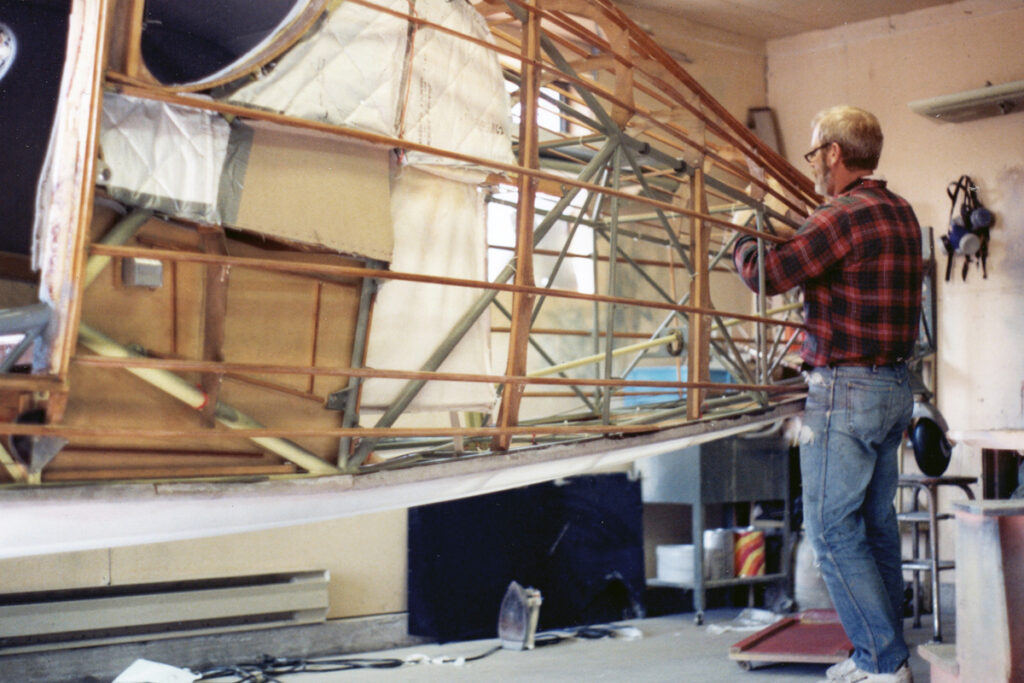
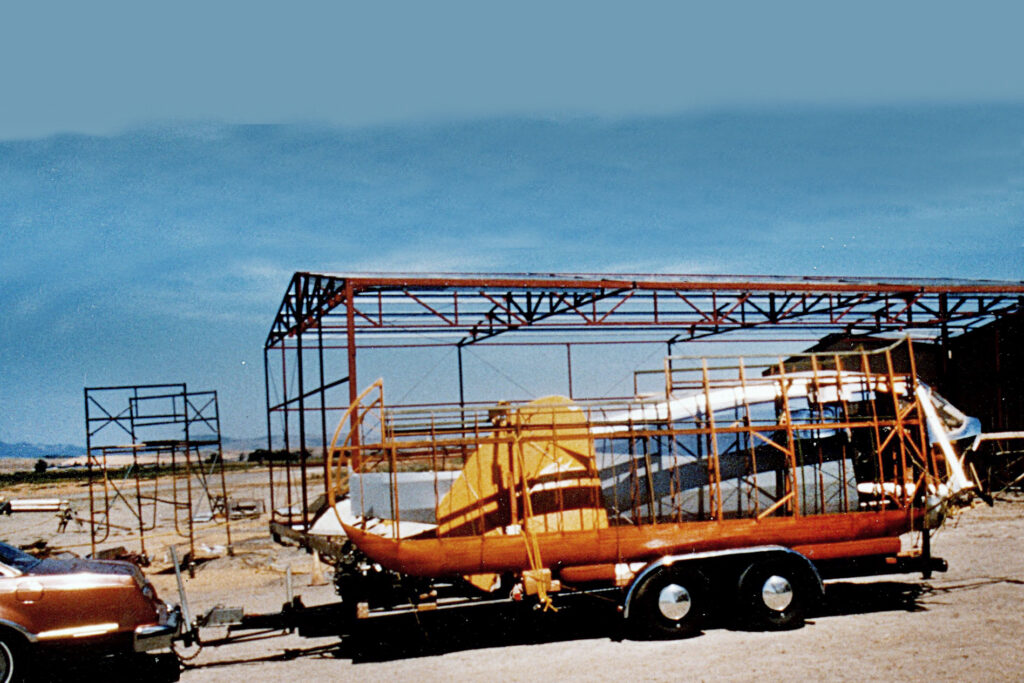
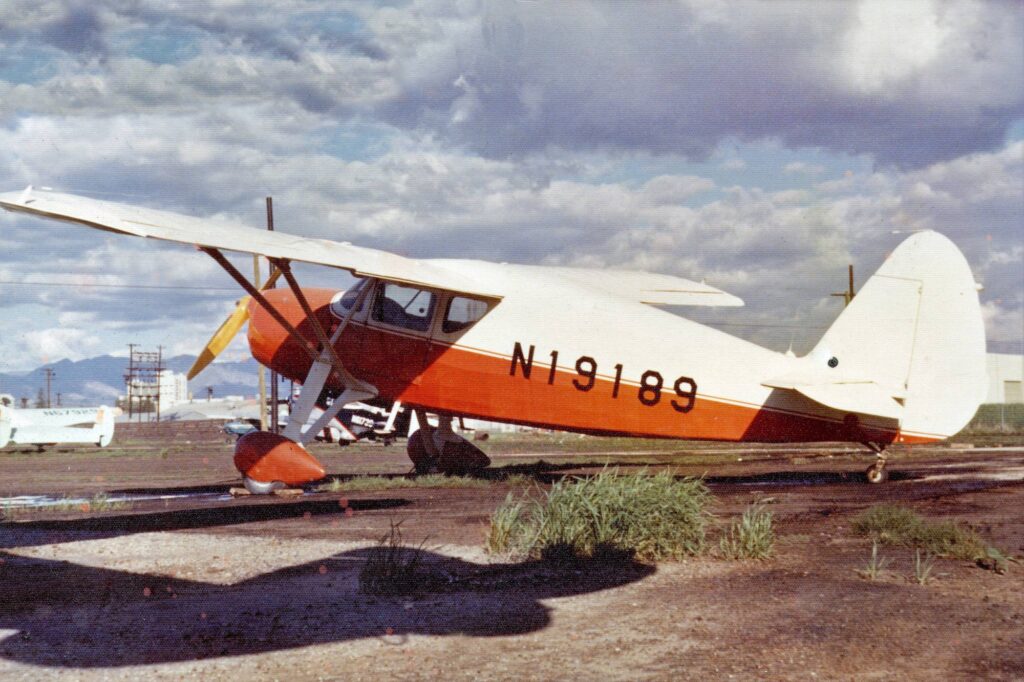
That brings us up to Griesbeck’s acquisition, serial #3304; The one in our hangar was a Fairchild 24K and one of only 34 or 38 built, according to different sources. We do know that it was built in Hagerstown, Maryland. In the spring of 1938, it was delivered to its first owner as NC19189. That owner was a corporation named Aircraft Service Inc., located at the municipal airport in Cleveland Ohio. It is believed that only eight of the 38 K models remain.
NC19189 passed through the hands of some 18 owners until it arrived in Schellville, California. Brian and Beverly Esler purchased it with the intent of doing a full restoration but instead sold the project to Werner. This involved a complex deal that included a freshly restored Aeronca L-3.
At this point in its long career, NC19189 had just 2223 hours on the airframe.
Born in southern Germany in 1943, Werner Greisbeck and his family immigrated to southern British Columbia in the early 1950s. As a teen, he worked in the family bakery pulling the 3 am shift to earn the money for flying lessons. A lifetime of attention to detail as a flight instructor, a career as an air traffic controller and as an AME prepared him for the tasks that lay ahead. Over the years he had accumulated over 5500 hours of flying time and that background and his extensive experience in wood and fabric work prepared him well for the Fairchild project, having restored over 20 classic and antiques and built a couple of “homebuilts”. Included in the count were five J-3s and an L4, a “Flitfire” replica, DeHavilland Tiger Moth, Beech Staggerwing, Waco RNF, Marquart Charger, Aeronca L-3, a Champ, my Stinson, and of course his 1941 Porterfield. His restoration expertise was recognized by many of his peers as he spent summers as an antique and classic judge at the Arlington airshow; this in addition to being a director in charge of aircraft maintenance at the Canadian Museum of Flight in Langley.
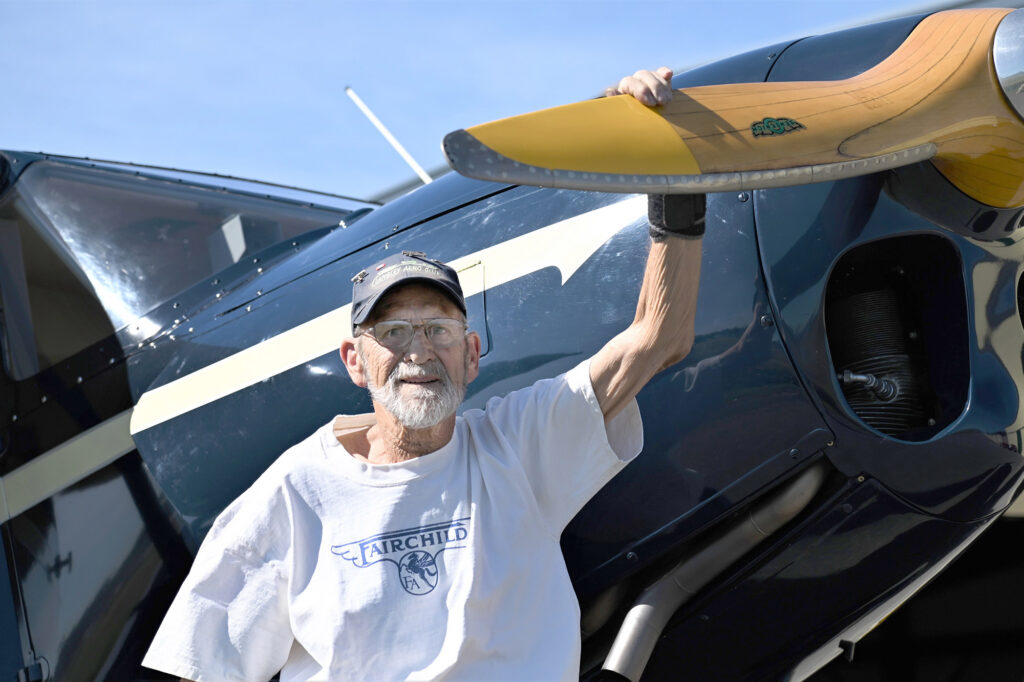
Werner began the Fairchild restoration that would take the next 4 years and a lot of research. Just getting the project home involved a round trip of some 1860 miles, several days on the road as well as a few issues with customs during the border crossing back into Canada. After months spent sorting out past ownerships and getting the appropriate bills of sale, he was able to get the aircraft registered in Canada as CF-BWW.
After getting the Fairchild parts home and sorted, he removed the wooden fuselage formers and then sandblasted and epoxied the fuselage. Once that chore was done, he reinstalled the formers that give the Fairchild its distinctive shape.
The wing, built by Ruth Spenser of Anderson, California in 1979, had the original spars but she had made all new ribs and installed new cables and hardware. This work was so well done that little more than minor touchup was required.
The stabilizer and fin required extensive repairs including a new rear spar and top and bottom plywood skins. The original Grimes landing light was overhauled and reinstalled. Both 20-gallon fuel tanks were repaired and reinstalled.
The left door frame was built from scratch using the N.O.S. (new old stock) right door as a guide. The Fairchild 24 has a unique quality in that the side windows can be rolled up and down. This helps improve picture taking and lends a decidedly cool factor when taxing in at a flyin. To facilitate this, new “Model A Ford” window winders were installed. The door panels were upholstered using the same material as the seats. LeBaron Bonney of Amesbury, MA provided the appropriate vintage material for not only the seats and doors but also the headliner. The interior was gutted and replaced with this immaculate blue and grey fabric reminiscent of the era. Each seatback contains a leather trimmed map pocket.
The instrument panel contains as many overhauled vintage instruments as could be found, including an airspeed indicator complete with the Fairchild logo. Werner installed a modern radio in one of the instrument openings. The transponder is hidden in a special side pocket that opens for use but can be closed for that 1930’s look when the aircraft is on display.
A new stainless-steel firewall had to be fabricated to replace the original as it was unlikely to get Canadian approval seeing as how it was made of a sandwich of aluminum and asbestos! He then went completely through the inverted 6-cylinder Ranger 6-440-C2 even though it had less than 50 hours since a military overhaul. All new main bearings and thorough check of all the other bits and pieces that make up the 200 hp engine were done before installation. A refurbished 3-gallon oil tank ensured a sufficient supply of lubricant. A new wood Sensenich propeller and a polished aluminum spinner completed the firewall forward installation.
Flying again for the first time since July 23, 1979, on July 30, 1991, almost exactly 12 years to the day; this took place at his home airport of Langley BC .Later trips included Oshkosh and flyins and airshows in British Columbia as well as others up and down the west coast including California, Washington and Oregon all the while accumulating another 700 hours in the process.
Being a ‘neighbor’ in the hangar presented more than a few opportunities to get a right seat ride on some of those trips to flyins and local $100 hamburger flights.
On one of many memorable rides in BWW while over the Fraser River when, suddenly there was a Pitts beside us, so close that I couldn’t see the whole aircraft without turning my head. As if that wasn’t dramatic enough, the thing was upside down. The Pitts driver, a friend and an incredibly capable pilot with military, airline and airshow experience and my friend, the ever so controlled flight instructor, air traffic controller and aircraft restorer never even flinched, but I did however become aware of a very gentle, flat turn away to the right.
As most who own a restored antique or classic know, the work is never done and if one has some of the attributes of OCD, it can always be just a little better. BWW was no exception and was in a constant state of renewal with nothing exempt from the master’s critical eye. This is confirmed by the fact that Werner had received a wall full of awards for his workmanship during his 23 years as the caretaker of #3304.
Some of these are:
• Champion 1991 EAA Chapter 85, Delta BC
• Best Cabin Monoplane 1991 NWAAC Arlington, WA
• Best Cabin Monoplane 1992 NWAAC Arlington, WA
• Best of Show 1993 NWAAC Arlington, WA
• Grand Champion Antique 1994 NWAAC Arlington, WA
• Special Award 1994 Merced, CA
• Outstand Closed Cabin Monoplane 1995 EAA Oshkosh
• Overall Grand Champion 2014 Hood River, OR
All good things must come to an end or so they say. Werner decided to sell BWW. An offer was accepted from a buyer in Kentucky who sold it on to another in California. BWW once again bears a US registry.
![[Credit: Mike Davenport]](https://kitplanes.com/wp-content/uploads/2026/02/DSC_0053.jpg?w=218&h=150&crop=1 "Pre-War Porterfield")